Work, for most of us, it’s a necessity that allows us to earn money to provide for ourselves and our loved ones. Working does of course have its challenges. Have you ever found yourself working somewhere where the senior management of the organisation seem vacant, almost invisible, and fail to provide any direction?
If you have, you know the impact it can have on you and your colleagues.
You spend your time busily working in one direction, only to then have to pivot and move in a different direction when they’ve changed their mind, again! A little while after that, you’re fighting another fire and pivoting again. You feel like you’re on a merry-go-round, going round in circles but getting nowhere fast.
The root cause of the issue may be… a Directionless Director!
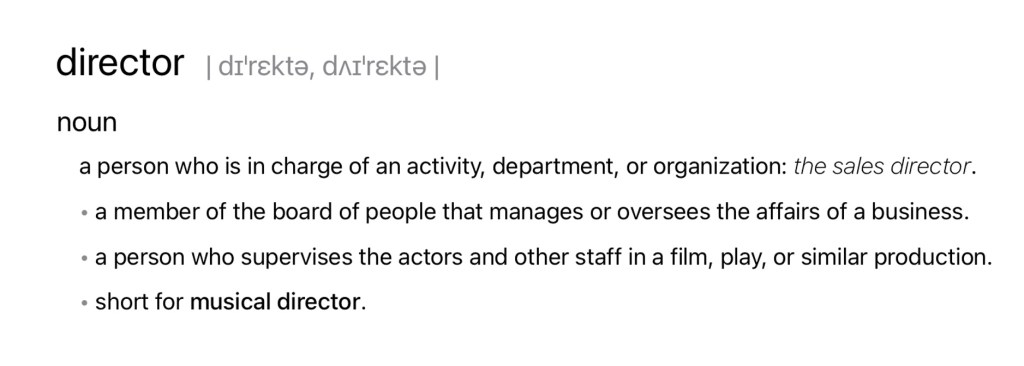
The Director’s role is to manage all the resources available to them (including people) to lead the business or activity in the appropriate direction.
If you’re in a role as a Director, congratulations. You’ve probably worked really hard to get there, but remember, the fundamental thing your people are looking for from you is to set the direction you want and need people to move in to achieve success.
It can be daunting, challenging, it’s not easy, especially if you’re new to the role and level of responsibility. It can take time to ‘find your feet’ and that’s okay. As long as you communicate effectively, people will understand, and they will keep the show-on-the-road until you provide a specific plan.
If communication isn’t your ‘thing’, or you’re not comfortable with people, you need to learn to get comfortable. As a minimum, you need to feel those nerves, but do it anyway.
The perils of inactivity or self-interest
If you’re the kind that likes sitting back, saying little, keeping a distance from the ‘workers’, or worse, spending your time satisfying your own interests, you may find your leadership challenged before too long.
Establishing a vision
What’s your vision? People, especially in teams, need direction. Their job is to do the necessary to reach a destination, so you need to make sure they know where you want them to go. Commonly referred to as a ‘vision,’ if you don’t have a vision for where you want to take your business, you can’t share that vision, and no one will know what you’re trying to achieve. Worse still, without a vision, you can’t even start to form a strategy. If you don’t know where you want to go, you definitely can’t work out how you are going to get there!
Consequences of poor communication
You might think you don’t need to. People will just carry on doing the job they’ve always done. Maybe. Maybe you’ll get away with this for a short while, but it’s not a long-term strategy by any means. A failure to communicate effectively the vision, the strategy, the direction you are taking the team, department, organisation, or any form of activity, may result in some or all of the following consequences:
1. Lack of progress
If you don’t know where you’re going, you can’t take the necessary steps to get you there, it really is that simple. How can you achieve anything if you don’t know what it is you’re trying to achieve?
2. Busy going nowhere
People will busy themselves with what they think they should be doing, or what they want to be doing. Whilst this can produce some results, it’s not a coordinated effort. It’s like lots of cogs are turning but they’re not connected so nothing really happens.
3. Dissatisfaction, and loss of trust and confidence
People like to feel that what they do is worthwhile and appreciated. If it’s not clear that what they’re doing is what is required, or they do not receive appreciation for it, dissatisfaction sets in. A failure to be clear with what is needed, and to appreciate the work people are doing, trust and confidence in you will be eroded.
4. High staff turnover
All of the above adds up to job/role dissatisfaction, and when people feel like this, they look to leave. The debate will always rumble on as to whether people leave bad jobs or bad managers, and I’ll cover that another time but, spoiler alert, the manager is usually the main contributor for people choosing to leave.
Setting and communicating direction
As a Director, YOU set the direction. Once people know the direction you want to head, they’ll use their skills and capabilities to make it happen. Think of it like this: if everyone is spinning around in circles and you direct them to head North, they’ll stop spinning and will start to head North. If you don’t, they’ll either do their own thing and choose their own direction, or they’ll just stop spinning and leave.
I’ve talked before about the difference between managers and leaders. Just remember, your position in the hierarchy does not make you a leader. It’s your ability to inspire others to follow you that does.
Conclusion
If any of this applies to you, take some time to think about where you want to take your business, department, or team, and start preparing to communicate this. If you don’t, you’ll find everyone is ‘busy,’ but you’re going nowhere.
What do you think? Have you worked for someone that lacked direction? How did it make you feel? Are you struggling to provide the direction your people need?
Let us know in the comments.
 Think Can Will